Uptown Legacy
The Culture
of Harlem
Three migrations. One neighborhood. A culture that changed America and echoed around the world.
Harlem was never one thing. It was built by people who arrived from different directions, carrying different traditions, and found themselves shoulder to shoulder on the same blocks. Southern families who rode the rails north. Caribbean islanders who crossed the sea for something better. West Africans who planted roots on 116th Street. Each group brought its own language, its own kitchen, its own rhythm. What they built together became the cultural capital of Black America.
1916 — 1970
The Great
Migration
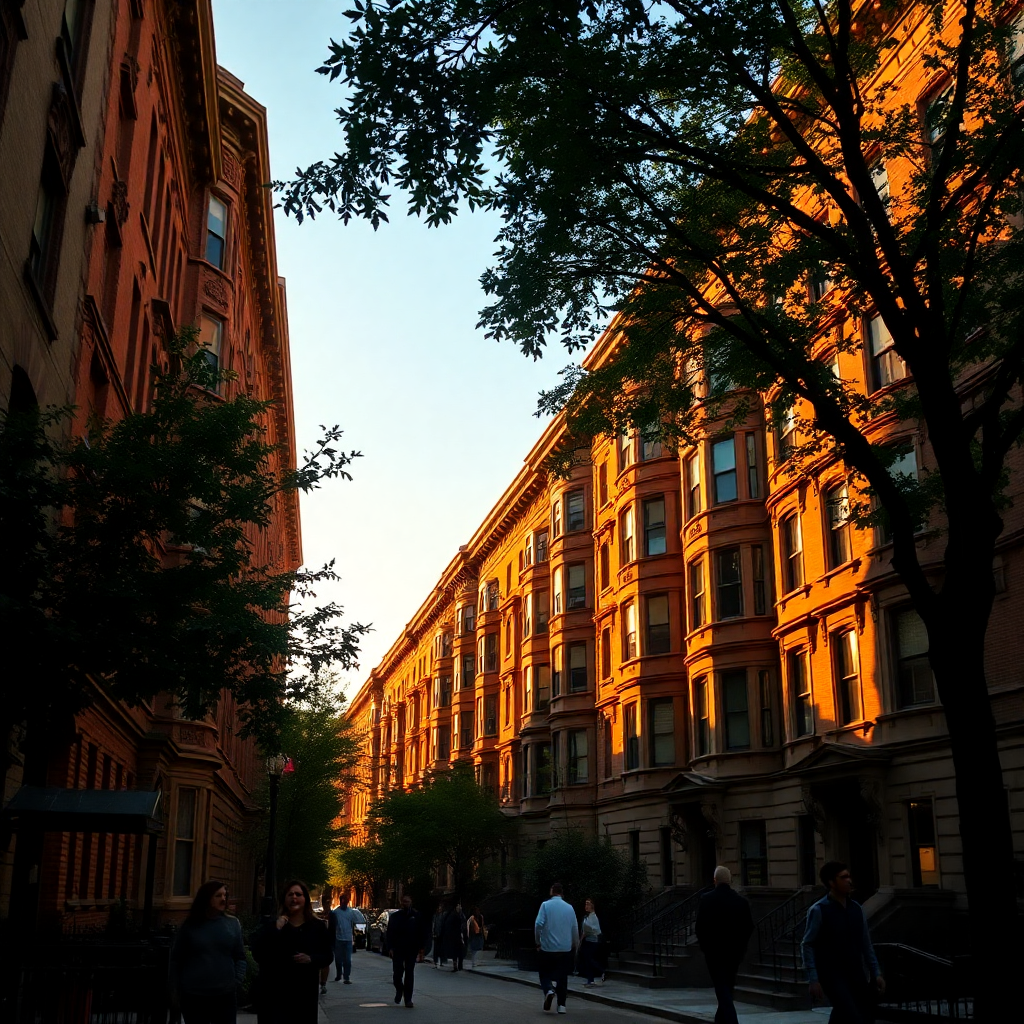
Between 1916 and 1970, six million Black Americans left the rural South for northern cities. Harlem became the destination. They came from the Carolinas, Georgia, Virginia, Alabama, Mississippi — fleeing Jim Crow, sharecropping, and violence. They carried everything that mattered in suitcases and memory: the blues, gospel, recipes passed down through generations, and a faith forged in fire.
They filled Harlem's brownstones and tenements. They built churches on every block — by 1926, one hundred and fifty blocks in Harlem counted one hundred and forty churches. Storefront congregations led by migrant pastors who worked during the day and preached at night. The church wasn't just worship. It was the first stop for new arrivals. The employment agency. The credit union. The community center.
The music traveled too. Blues from the Delta. Jazz that had been born in New Orleans. Gospel that shook the walls. Harlem didn't just receive this culture — it amplified it, mixed it, and sent it back out to the world through the Apollo, the Savoy, the Cotton Club, and a hundred smaller stages.
1900 — 1930s
Caribbean &
West Indian Roots
By 1930, nearly a quarter of Harlem's residents were West Indian. They came from Jamaica, Trinidad, Barbados, St. Kitts, the Virgin Islands, Antigua — escaping the collapse of the sugar industry and seeking opportunity in a city that promised more than the colonial economies back home. They were working class, literate, and politically sharp.
Marcus Garvey arrived from Jamaica and built the largest Pan-African movement in history from a Harlem office. Claude McKay, born in Jamaica, wrote some of the defining poetry of the Harlem Renaissance. Shirley Chisholm, daughter of Barbadian and Guyanese immigrants, grew up in these streets before becoming the first Black woman elected to Congress. Casper Holstein, born in St. Croix, became one of Harlem's most prominent entrepreneurs and philanthropists.
The Caribbean community built mutual aid societies, benevolent organizations, and political clubs. They brought carnival traditions, calypso rhythms, and a style of direct political organizing that shaped Harlem's activist identity. The tension and collaboration between Southern migrants and Caribbean immigrants — different backgrounds, shared struggle — became one of the engines of Harlem's cultural power.
1980s — Present
West African
Heritage
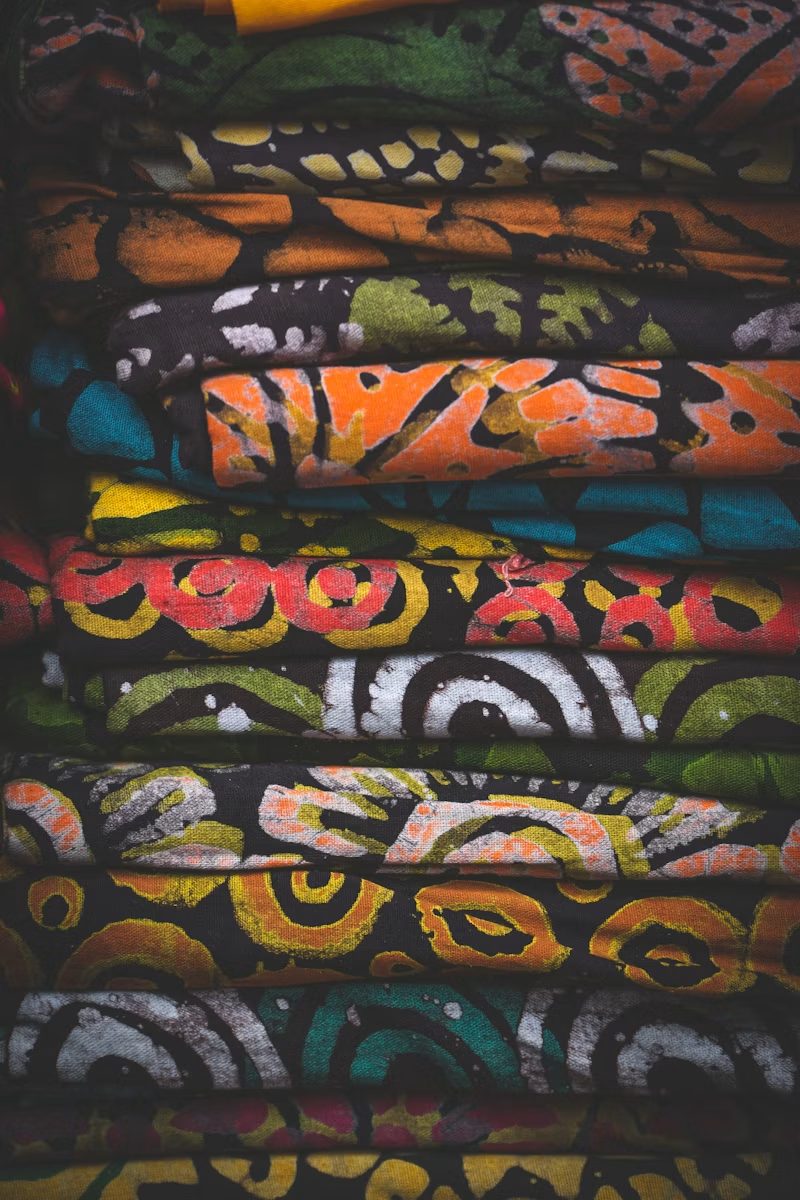
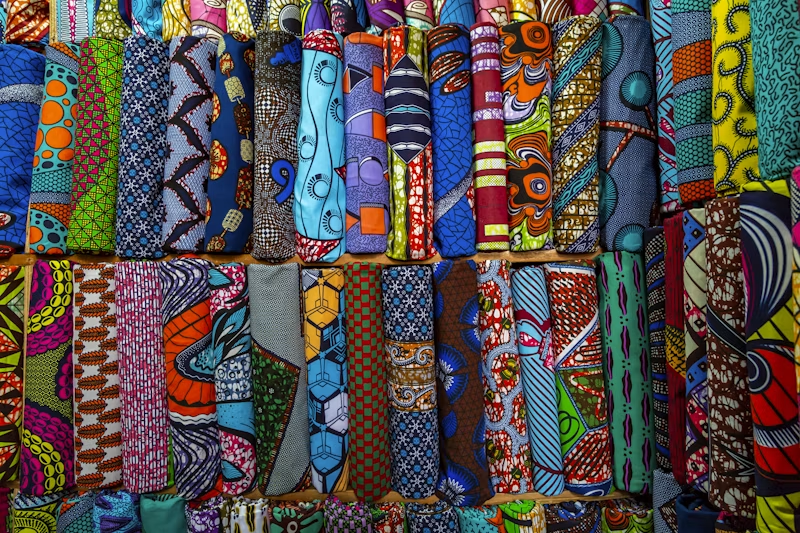
Starting in the 1980s, a new wave arrived. Immigrants from Senegal, Mali, Guinea, Côte d'Ivoire, and Burkina Faso settled along 116th Street between Lenox Avenue and Frederick Douglass Boulevard, building what became known as Little Senegal. They opened restaurants serving thieboudienne and mafé, fabric shops with wax prints and traditional garments, and the bustling Malcolm Shabazz Harlem Market.
The Senegalese Association of America, founded in 1989, became the community's anchor — defending cultural traditions, supporting new arrivals, and connecting Harlem to Dakar. Walking through Little Senegal, you hear Wolof on the street, smell groundnut stew from open doorways, and see tailors cutting boubous in shop windows. It is Harlem's most direct living connection to the African continent.
For chef Marcus Samuelson, who runs Red Rooster on Lenox Avenue, Harlem's African presence is inseparable from its identity. The neighborhood that was shaped by the Great Migration and Caribbean immigration now carries a third layer — and the cultural conversation between all three continues on every block.
1920s — 1930s
The Harlem
Renaissance
When Southern migrants and Caribbean immigrants found themselves living side by side in Harlem, something unprecedented happened. Writers, musicians, artists, actors, and thinkers — many of them young, most of them broke — created a cultural explosion that redefined what it meant to be Black in America.
Langston Hughes captured the soul of the streets in verse. Zora Neale Hurston channeled Southern folk traditions into fiction. Claude McKay brought Caribbean fire to American poetry. Duke Ellington and his orchestra made the Cotton Club the most famous nightclub in the world. Augusta Savage sculpted portraits of Harlem's people. Aaron Douglas painted murals that told the story of a race in motion.
The Harlem Renaissance was never just an arts movement. It was a statement of existence. Black artists created work confidently and with pride at a time when much of America denied their humanity. The work they produced — the literature, the music, the visual art, the theater — laid the groundwork for every Black cultural movement that followed, from the Civil Rights era to hip-hop.
“I, too, sing America.”
— Langston Hughes
Harlem’s Culture Today
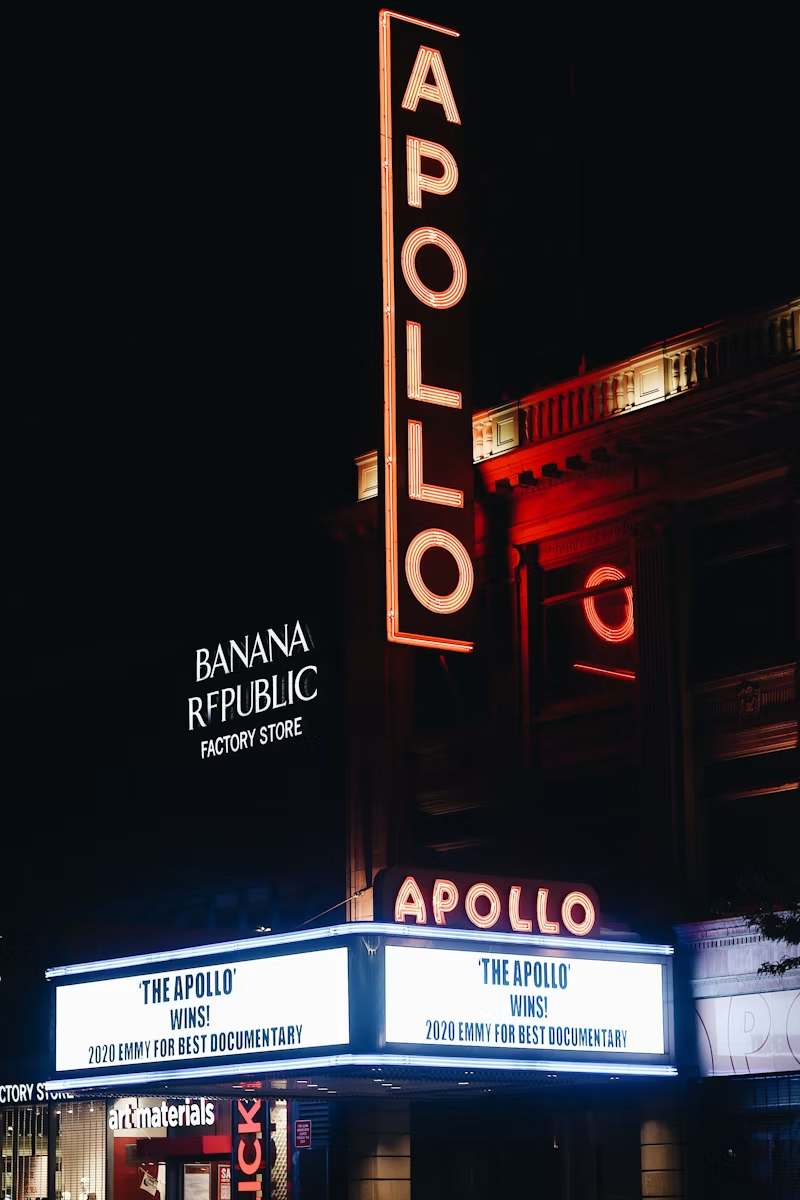
Walk 125th Street and you pass the Apollo Theater, where amateur night still makes and breaks careers. Turn onto 116th and the scent of Senegalese cooking fills the block. Step into a Sunday service at Abyssinian Baptist and the choir hits notes that connect straight back to the Delta. Stop at Sylvia's for soul food that hasn't changed in decades, or try jerk chicken from a spot run by a Jamaican family that's been on the same corner since the 1970s.
Harlem's culture isn't preserved behind glass. It's lived every day — in the barbershops, the storefronts, the street corners, and the kitchens. Three migrations built it. Generations have kept it. And it's still being written.