Uptown Legacy
The History
of Harlem
From a Dutch farming village to the cultural capital of Black America. Nearly four centuries of reinvention.
Harlem has been reinvented more times than any neighborhood in America. A Dutch outpost. A wealthy white suburb. A Black cultural capital. A community in crisis. A neighborhood reborn. Each chapter left its mark on the streets, the buildings, and the people. This is Harlem’s story, from the very beginning.
1658
Nieuw Haarlem
On March 4, 1658, Peter Stuyvesant — Director-General of the Dutch colony of New Netherland — issued an order to establish a settlement on the fertile flatlands eleven miles north of Nieuw Amsterdam. They named it Nieuw Haarlem, after the city of Haarlem in the Netherlands. Ground was broken on August 14, 1658.
Before the Dutch arrived, this land belonged to the Lenape people, Munsee-speaking communities who hunted deer, fished the rivers, and gathered hickory nuts on the same hills where brownstones stand today. Colonial expansion displaced them, and enslaved Africans were used to build the road connecting Haarlem to Nieuw Amsterdam — making Black labor part of Harlem’s story from the very first day.
When the English seized the colony in 1664, Nieuw Haarlem became Harlem. For the next two centuries, it stayed rural — farmland, country estates, and open space, far from the growing city to the south.
1880s — 1910
Boom, Bust &
A New Beginning
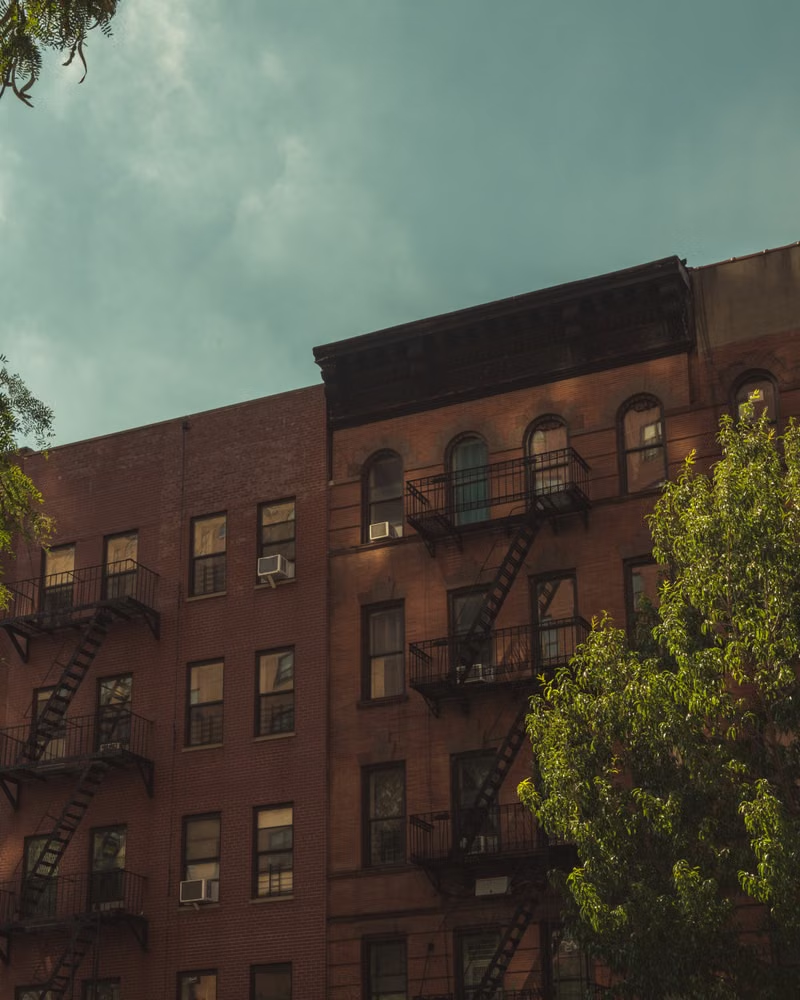
When the elevated railroads reached Harlem in the 1880s, developers saw gold. They built thousands of brownstones and luxury apartments, expecting wealthy white New Yorkers to flood uptown. For a moment, Harlem was the most fashionable address in Manhattan. The Cathedral of St. John the Divine went up in 1892. Columbia University opened on 116th Street in 1897.
Then the bottom fell out. Developers overbuilt. Block after block of new apartments sat empty. Property values crashed — first in the 1890s, then again in 1904 after the subway arrived and another speculative frenzy collapsed.
Enter Philip A. Payton Jr. — the Father of Harlem. Payton, a college-educated Black entrepreneur from Massachusetts, saw the vacant brownstones as opportunity. He founded the Afro-American Realty Company in 1904 and convinced desperate white landlords to rent to Black tenants. It was a business move that changed American history. Within a decade, Harlem was becoming the largest Black community in the United States.
1916 — 1930s
The Great
Migration
Starting around 1916, the floodgates opened. Black families from the Carolinas, Georgia, Virginia, Alabama, and Mississippi boarded trains heading north — fleeing Jim Crow, sharecropping, lynchings, and a system designed to keep them in place. They arrived in Harlem by the thousands.
At the same time, Caribbean immigrants — from Jamaica, Trinidad, Barbados, St. Kitts, and the Virgin Islands — crossed the sea for the same reason. By 1930, nearly a quarter of Harlem’s residents were West Indian. Together, Southern migrants and Caribbean immigrants built the neighborhood that would define Black America for the next century.
They built churches on every block. They opened businesses. They created mutual aid societies. They brought blues, gospel, jazz, calypso, and a political sharpness that would make Harlem the most important Black community in the world.


1920s — 1930s
The Harlem
Renaissance
When all these people — Southern, Caribbean, African American, West Indian — found themselves living on the same blocks, something unprecedented happened. A cultural explosion. Writers, musicians, artists, and thinkers created work that redefined what it meant to be Black in America.
Langston Hughes wrote poetry that captured the soul of the streets. Claude McKay, born in Jamaica, brought Caribbean fire to American literature. Duke Ellington made the Cotton Club the most famous nightclub in the world. Zora Neale Hurston channeled Southern folk traditions into fiction. Augusta Savage sculpted portraits of Harlem’s people. The Apollo Theater opened in 1934 and became the stage where legends were born.
The Harlem Renaissance wasn’t just an arts movement. It was a declaration — Black artists creating work with confidence and pride at a time when much of America denied their humanity.
“I was born here, I’m going to die here, and I’m not going to leave.”
— James Baldwin, on Harlem
1940s — 1960s
The Fight
For Justice
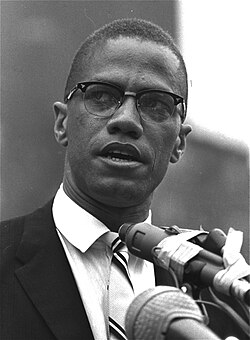
After the Renaissance, Harlem became the political center of Black America. Malcolm X made his base at Mosque No. 7 on 116th Street and Lenox Avenue, delivering speeches that challenged the nation to confront its hypocrisy. Adam Clayton Powell Jr., pastor of the Abyssinian Baptist Church, became one of the most powerful Black politicians in the country — elected to Congress in 1944 from his Harlem district.
The 1964 Harlem riot, sparked by the police killing of a Black teenager, sent shockwaves through the nation and foreshadowed the urban uprisings that would follow in cities across America. Through it all, Harlem’s churches, newspapers, and community organizations continued to organize, resist, and demand change.
This was also the era when Harlem’s cultural institutions became permanent. The Schomburg Center for Research in Black Culture, the Studio Museum in Harlem, and the National Black Theatre were all born from this generation’s insistence that Black history and Black art deserved their own institutions.
1970s — 1990s
Hard Times &
Resilience
The crack epidemic of the 1980s devastated Harlem. Combined with decades of government disinvestment, white flight, landlord abandonment, and arson, the neighborhood that had once been the center of Black cultural life was in crisis. Buildings stood hollow. Blocks emptied out. The media wrote Harlem off.
But Harlem never stopped being Harlem. The churches stayed. The barbershops stayed. The families who had been there for generations stayed. Community organizations fought for housing, for schools, for health clinics. Block associations swept their sidewalks and watched each other’s children.
And underneath the crisis, a new generation was building something. Hip-hop was being born in the Bronx and spreading south. West African immigrants were arriving on 116th Street. The seeds of the next Harlem were already in the ground.
2000s — Present
Harlem Today
Harlem in the 21st century is a neighborhood in conversation with itself. Gentrification has brought new investment but also displacement. Longtime residents watch as brownstones that sold for tens of thousands now sell for millions. National chains have arrived on 125th Street. The tension between preservation and change defines daily life.
But the culture persists. The Apollo still holds amateur night. Sylvia’s still serves soul food. Sunday services at Abyssinian Baptist still fill every pew. Little Senegal still smells like groundnut stew. The Schomburg Center still guards the archives. Street vendors still sell oils and books on 125th. The barbers still know everybody’s name.
Harlem has been counted out before. It came back every time — not by erasing what came before, but by building on top of it. That’s the legacy. That’s the history that’s still being written.